
I often attend workshops and conferences for piano teachers and have the opportunity to observe adjudication sessions with piano students from many different age groups. Expressive piano playing ALWAYS comes up during these sessions. Continue reading “Teaching Expressive Piano Playing”
Brain Breaks for Piano Practice
When my daughter was in kindergarten, I often volunteered in her classroom. Upon my first visit, I was struck by a brilliant concept I had never heard of or experienced: brain breaks. Continue reading “Brain Breaks for Piano Practice”
September Members of the Month
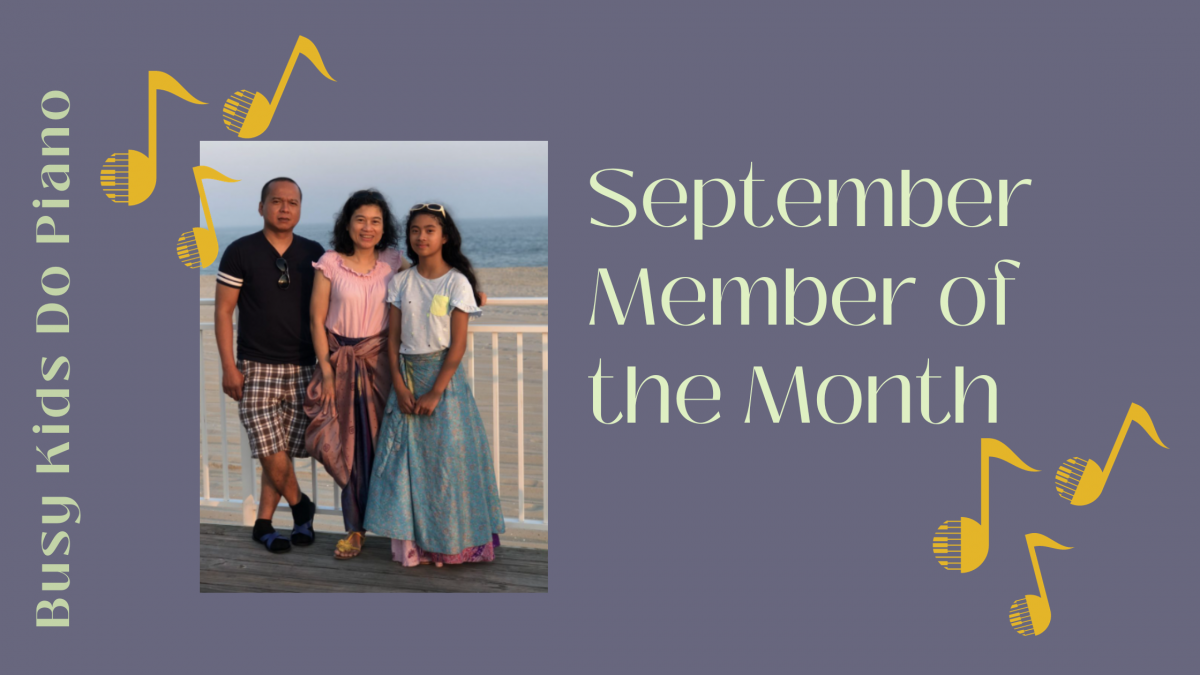
Meet the Idris family from small town Pennsylvania! Dewi, Denny and their 11 year old daughter Abigail.
Q: What’s your musical background?
My Husband (Denny) and I grew up without any formal musical education.
Denny self taught himself guitar when he was in highschool.
Actually, I (Dewi) had a piano lesson for like.. 2 classes (if this counts) with private teacher, but on the third meetup, she quit (Gasp!) Not because of me, but because she found out that she was pregnant and had bad morning sickness and (this is not related to musical background, but… anyway..) A few months later my mom signed me up for dance class. After just one class (guess what?) this teacher also quit with the same reason (I know…I know.. you must be thinking that I was some kind of a wizard-fertile-machine kid back then, me too :D). Back to music, I know one song that I can play on the piano, Beyer no.8. That song introduced Abby to piano and made her want to learn piano.
Abby has been playing violin since she was in 3rd grade, she is starting 7th grade now, so she is pretty familiar with reading music. She is also a member of the junior symphony orchestra in our county. Continue reading “September Members of the Month”
Piano Practice Tricks That Will Change Your Life
I sometimes feel as though I can’t come up with another way to motivate my strong-willed child to practice. I’ve tried all the piano practice tricks. I’m out of creativity.
Or maybe you have a wiggly worm who can’t sit still longer than a few minutes and you aren’t sure how to get anything accomplished.
Or maybe you have a perfectionist who becomes immediately frustrated when she makes her first mistake during piano practice. Continue reading “Piano Practice Tricks That Will Change Your Life”
Creating a Piano Practice Space
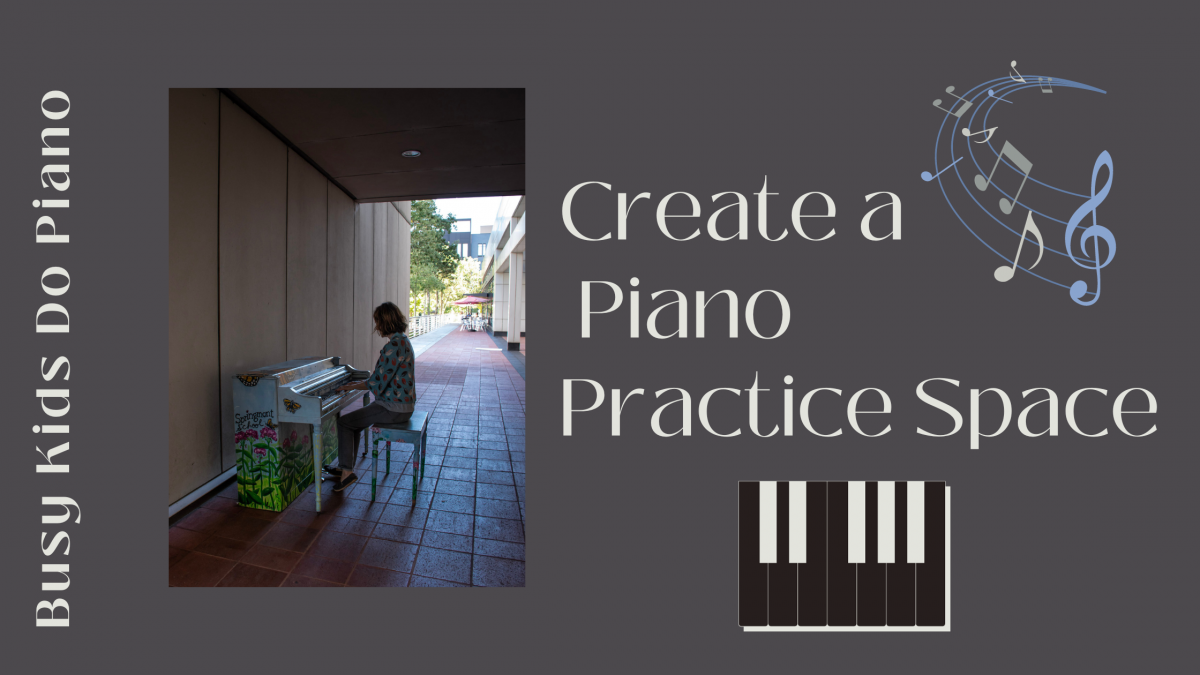
When a parent of a student calls me and says, “Johnny is really resistant to piano practice lately,” the first question I ask is, “Where is your piano located?”
More often than not, I’ll learn that a student’s piano is located in a cold, damp basement or in their bedroom, leading the student to feel like he’s “missing out on the action” when he goes to practice piano.
This doesn’t mean your piano practice space needs to be a Pinterest worthy room of expensive decor and laminated practice charts.
What SHOULD a piano practice space look like? Read on for my tips… Continue reading “Creating a Piano Practice Space”
August Members of the Month
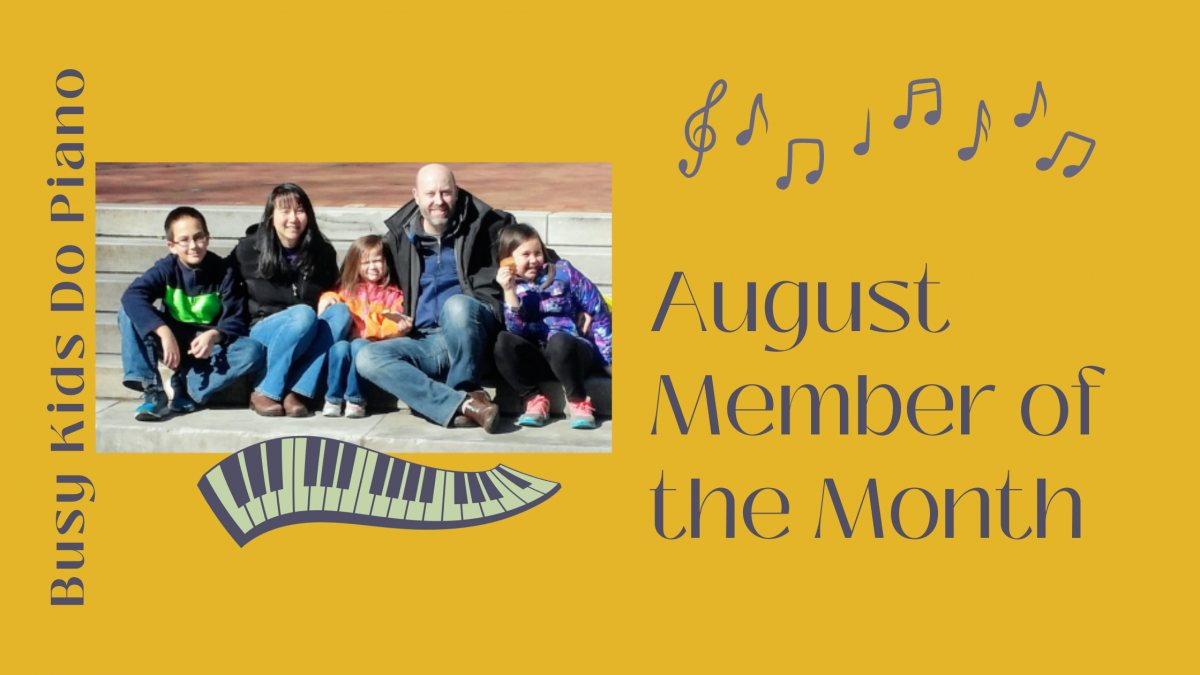
Meet the Hawkins Family! Ashley and Karen and their three children Sam (13), Allie (10), Kaili (5), Eliana (2). These Busy Kids are very excited to become pianists and love sharing their new skills with relatives.
Q: What’s your musical background?
I (Karen) took piano lessons from age 6-12, but I kept playing piano in our church and for my middle school choir.
Q: Anything fun or unique you’d like to share about your family?
A fun fact about us is that we just found out that we are related to someone who fought in the American revolutionary war! Continue reading “August Members of the Month”
Summertime Piano Practice: Tips and Ideas
If your family is anything like my family, your summer schedule probably looks a little bit different than your schedule during the school year (maybe even a LOT different). Our days tend to not have quite as much structure and more free time, but we also have some pretty big interruptions to the new “normal” with family vacations or even hosting friends and family as they come to visit. Does this mean summertime piano practice is nonexistent in your house?
Continue reading “Summertime Piano Practice: Tips and Ideas”
Independent Piano Practice: What It Looks Like & Your Role In It
You’ve arrived! Your student is practicing piano independently!
Truly, independent practice is reason for celebration BUT it doesn’t mean that you get to go watch Netflix whenever your student sits down to practice.
You still have an important role to play!
Watch my livecast here to learn what independent piano practice means for YOU — the parent: Continue reading “Independent Piano Practice: What It Looks Like & Your Role In It”
Royal Wedding: THE MUSIC!
I know I typically use my blog to share valuable practicing tips, musical resources and all kinds of super important stuff with readers.
Today I’m blogging about the music from the Royal Wedding.
While this might seem a bit “off-topic” for me, I actually think using real life moments and events to draw musical connections is an awesome and exciting way for kids to learn. And there was so much great music in Prince Harry and Meghan Markle’s wedding that I simply HAD to make it a teachable moment! Continue reading “Royal Wedding: THE MUSIC!”
May Member of the Month
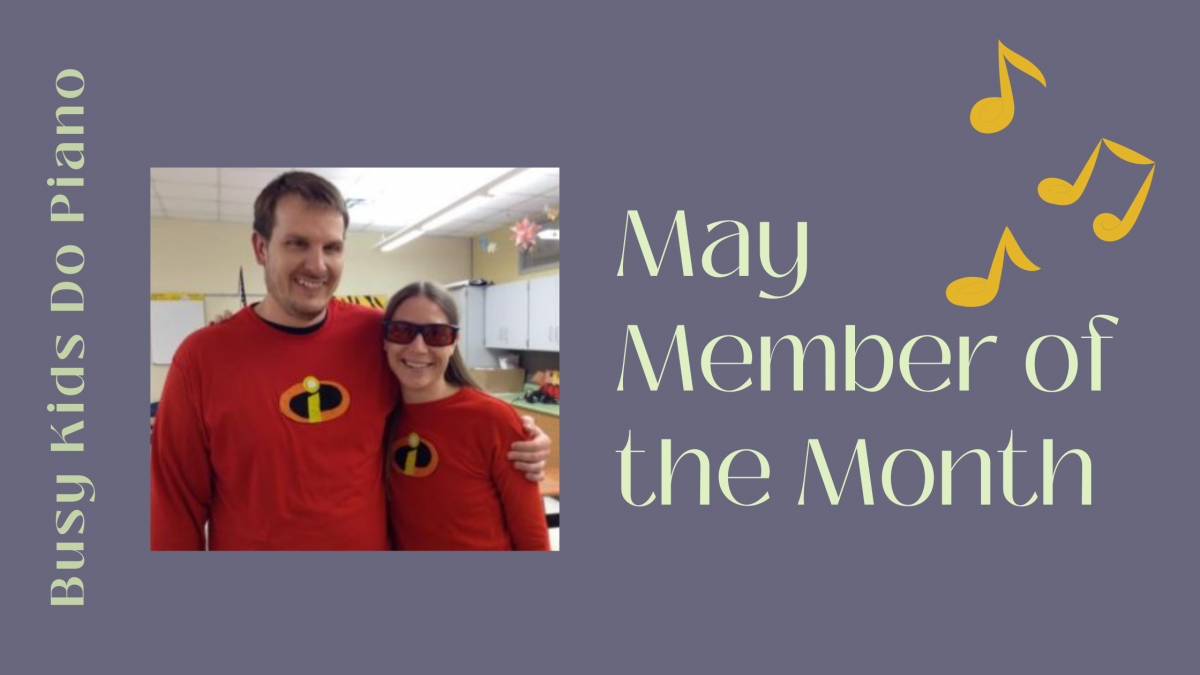
Meet Julie, Robert, Andrew and Rachel Gastler from Columbia, MO. Julie is a student in the Busy Moms program. She is currently taking a brief and unplanned hiatus from the piano due to injury.Last Friday she cut her right index finger with a table saw. She still has a finger but is unable to play the piano at the moment. She says, “That is by far the worst result of this injury. I can manage not writing and am happy to be banned from washing dishes for a while, but my piano is calling me and I can’t answer.” The good news is that she should be able to play again once she done healing, but it will be a while the stitches wont even come out for 2 weeks. Continue reading “May Member of the Month”