I often read articles about the science of learning and research on the brain. One of my children has developmental differences, and so I am always seeking “out of the box” ways to help his brain connect the dots. As a piano teacher, I always want to be able to support my students with their practicing and learning. I want to help my students become musicians who are confident in their abilities and who progress and feel successful as they move through their studies. Continue reading “Six Scientific Practicing Strategies”
Piano Lessons CAN Be Fun.
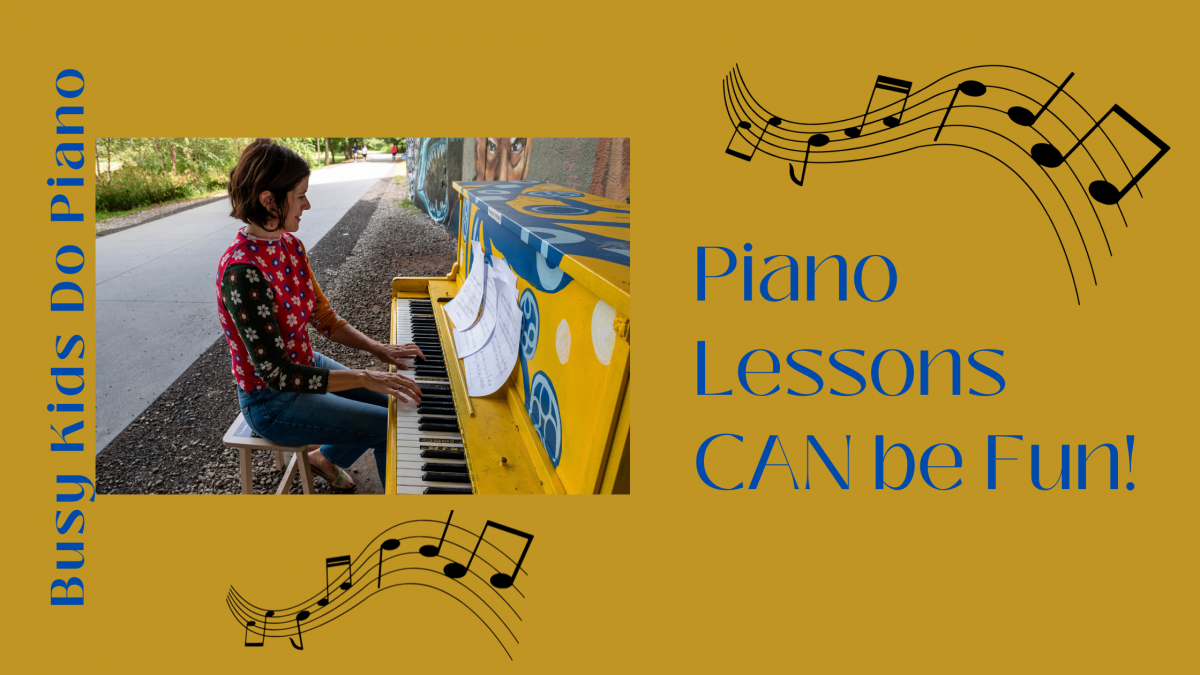
Sometimes a piano parent will surprise me by sharing a really negative experience or association with piano lessons.
“My teacher used to yell at me all the time if I didn’t get something right.”
“My teacher insisted on hour long lessons when I was 5-years-old and it was so difficult for me to sit still I would end up in tears.”
“Piano lessons were just so serious.”
There are many students who thrive with intensive study under strict, no nonsense teachers. Continue reading “Piano Lessons CAN Be Fun.”
Piano Practice Rewards: Why and How to Do Them
If the idea of piano practice rewards causes you to cringe, let me tell you a story.
I once had a piano student who was incredibly bright and had so much potential as a pianist. When she first started lessons with me, she was excited about how easily things were coming to her and practiced ALL THE TIME. As a result, she progressed quickly and was confident in her abilities.
As she progressed, things became more challenging, and she grew frustrated. Rather than working through the frustrations between her lessons with me, she resisted practicing. After a few weeks of having what seemed like an identical piano lesson to the last as we worked through challenges in her music, I called her mom to ask how practicing was going at home. Continue reading “Piano Practice Rewards: Why and How to Do Them”
July Members of the Month
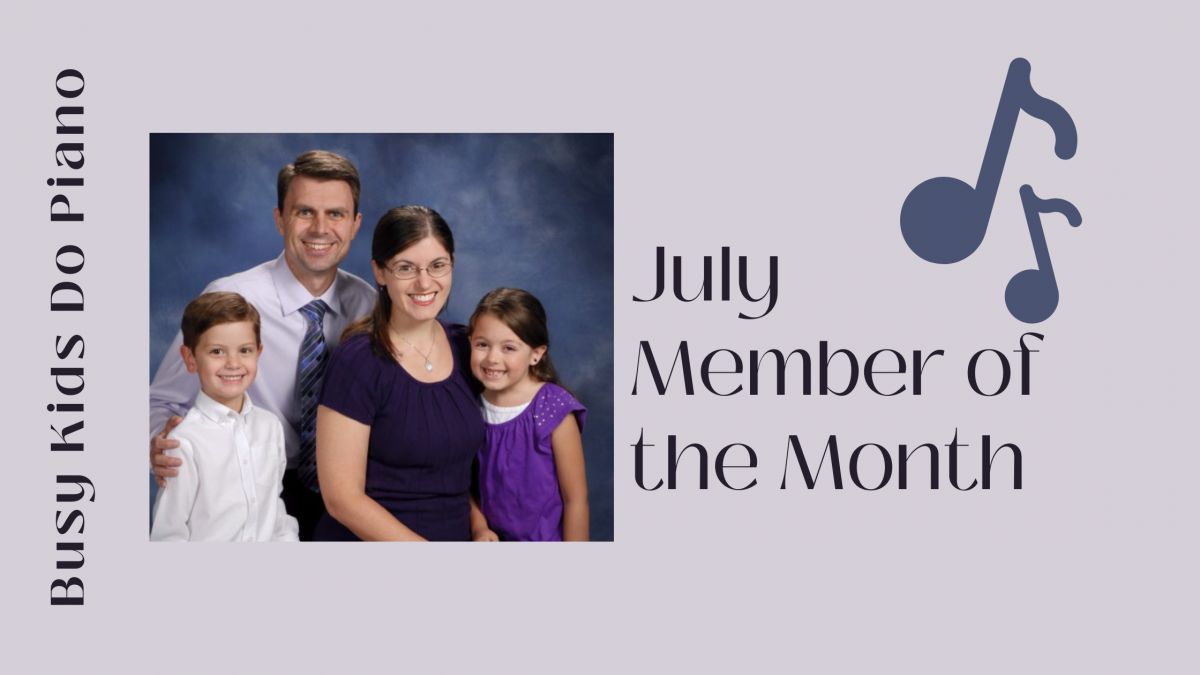
Meet the Day family from Florida! The day family has been an active part of the Busy Kids (and Busy Moms!) Do Piano community since last August. They have a fantastic, organized approach to implementing the online program in their home, and we think you’ll enjoy getting to know them a little better. Continue reading “July Members of the Month”
Slow Practice: Why It’s Important
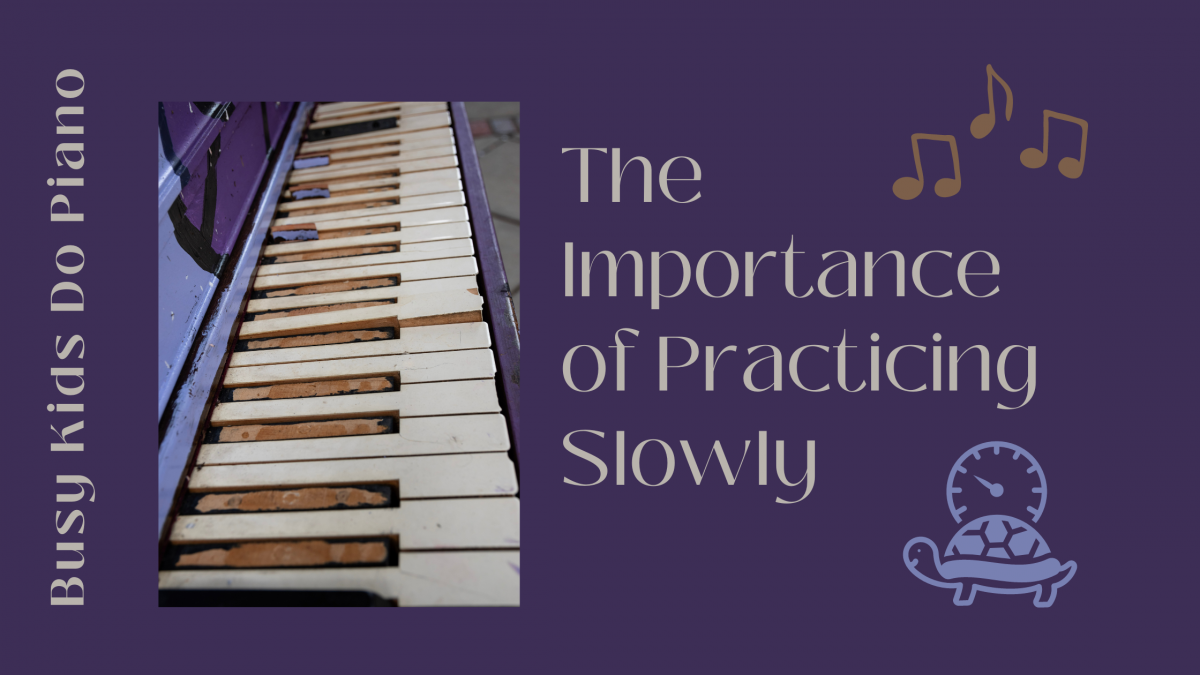
When a student is working on a piece of music that is getting a bit sloppy – perhaps the tempo is uneven, the touch isn’t articulated or the notes aren’t clear – I often task him with SLOW PRACTICE. (Meaning that I am asking him to practice the piece veeerrry slowly.)
The student usually groans.
(Often times when the student returns to me the following week, I can tell that he didn’t actually practice the music slowly.)
But if the student DOES spend a week practicing the piece slowly then ohmygoodness, what a difference it makes. He returns to his lesson, plays the piece again at regular tempo, and we marvel at how much more polished, clear and beautiful the music sounds. He often observes how much easier it is to play and how he feels less frustrated! Continue reading “Slow Practice: Why It’s Important”
Making A Practice Plan.
At my high school, piano was a required “class”, and therefore, piano practices were something scheduled during the regular school day. I believed this to be a serious advantage because I no longer had to figure out a time to schedule practice between all the homework and extra-curricular activities that were beginning to fill my after-school hours.
The piano practices were held in the basement of our school building. Six to seven rooms were in the area with a piano in each, and a monitor would sit in the main area, strolling around and peering through the window into each practice room at regular intervals to make sure that students were, indeed, playing the piano and not reading books or doing other homework during this 40 minute period. (This was before cell phones, so you can only imagine the distractions that must take place now!) Continue reading “Making A Practice Plan.”
Finding Community Musical Resources.
I live in a small, rural town at the time of this writing. We moved here from a suburb of Milwaukee, and I remember feeling apprehensive that I wouldn’t have access to as many musically enriching opportunities for my family upon our move.
But was I ever wrong! We have been in our little town for nearly 8 years and traveled to many other neighboring small towns across our state . I continue to marvel at all the community resources available to myself as a piano teacher, and to my children as music students and lovers-of-music. Continue reading “Finding Community Musical Resources.”
Summertime Music Opportunities
Since my kids were babies we’ve made a habit of attending outdoor concerts, classical music festivals and library “concerts on the lawn” during the warm summer months. As it finally starts to warm up in our area, my almost-5 year old asked, “Now that it’s summer, when can we go to a concert?” Continue reading “Summertime Music Opportunities”
Summertime Piano Practice.
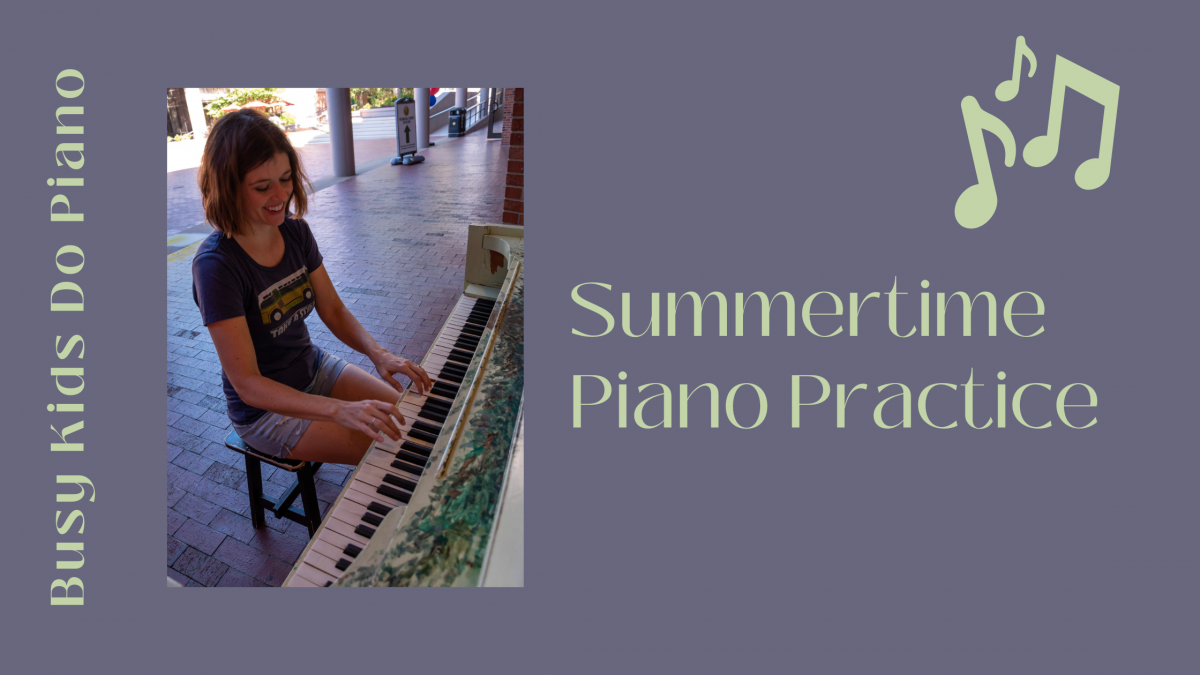
Many students have a much-needed and well-deserved break from school during the summer months. With summer on the horizon, perhaps you’ve also noticed that there are many “SUMMER READING CHALLENGES” around. I’ve seen them at our local bookstores, library and even McDonald’s. My own kids love these summer reading challenges and are super motivated to plow through books and keep track of their reading in order to earn free books, movie tickets or Happy Meals. Continue reading “Summertime Piano Practice.”
Sibling Rivalry At the Piano.
I teach many siblings at my studio and in my online programs, and I love that so many families are making musical education a priority in their household. (Plus, a little sibling rivalry can be motivating, right?)
Having a sibling in piano can be a wonderful thing. You have a duet partner, someone to ask questions to if you’re struggling, or perhaps even someone who motivates you to practice! But, it can also be tricky. Continue reading “Sibling Rivalry At the Piano.”